
Homemade Cat Food for Senior Cats: Vet‑Informed Guide + 3 Gentle Recipes
Heads up: Senior cats have special nutrition needs. Homemade meals can work, but they must be balanced with a complete feline vitamin–mineral supplement (or a recipe professionally formulated by a veterinary nutritionist). This article is education only and isn’t medical advice. Always talk with your vet—especially if your cat has kidney disease, hyperthyroidism, diabetes, or dental issues.
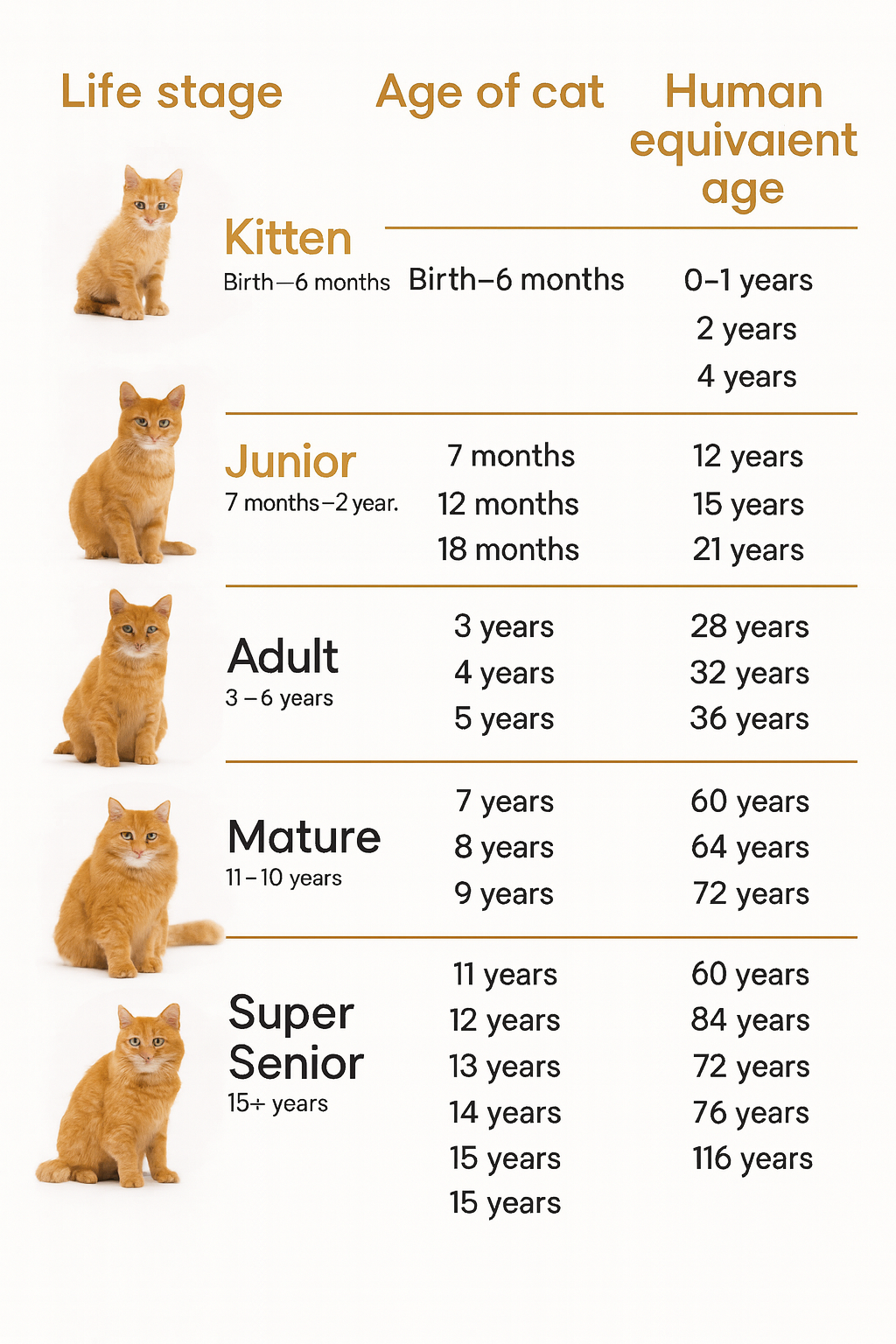
Cat Life Stages & Human Age Equivalents (Cat Years to Human Years Chart)
Wondering how old your cat is in human years? This guide explains the official feline life stages and what they mean for nutrition, activity, and vet care. Use the cat age chart below to convert cat years to human years and plan the right care from kitten to super senior.
- Kitten (0–6 months): rapid growth, vaccines, socialization.
- Junior (7–24 months): high energy; training and enrichment.
- Adult (3–6 years): prime health—keep weight and playtime on track.
- Mature (7–10 years): focus on teeth, joints, regular checkups.
- Senior (11–14 years): semiannual exams; softer textures may help.
- Super Senior (15+ years): comfort, hydration, closer monitoring.
Check the chart below to see your cat’s human-age equivalent.
Before You Start: Safety & Essentials
- Balance matters: Cats are obligate carnivores and require adequate taurine, calcium, vitamins A/D/E, B‑complex, essential fatty acids, and more. Use a complete feline supplement designed for homemade diets and follow the label for your batch size. Skipping it can cause serious deficiencies.
- Avoid harmful ingredients: No onion, garlic, chives, leeks, grapes/raisins, alcohol, chocolate, xylitol, or cooked bones. Keep salt very low and avoid highly seasoned broths.
- When to get a customized recipe: If your cat has kidney/heart disease, pancreatitis, diabetes, IBD, or food allergies, ask your vet about a prescribed formulation.
- Texture for seniors: Many older cats prefer soft, moist pâtés they can lap. Add warm water or unsalted broth to reach a pudding‑like consistency.
How to Transition to Homemade Food
- Start by mixing 10–20% homemade with your cat’s current food for 2–3 days.
- Increase by ~10–20% every 2–3 days if stools and appetite are normal.
- Pause or step back if you see vomiting, diarrhea, constipation, or refusal to eat. Contact your vet if issues persist.
3 Senior‑Friendly Recipes
Notes: All “complete” recipes below assume you’ll add a vet‑approved complete feline supplement (follow its label for the total weight of the batch). Add oils and supplements off heat after the food cools to warm/room temperature.
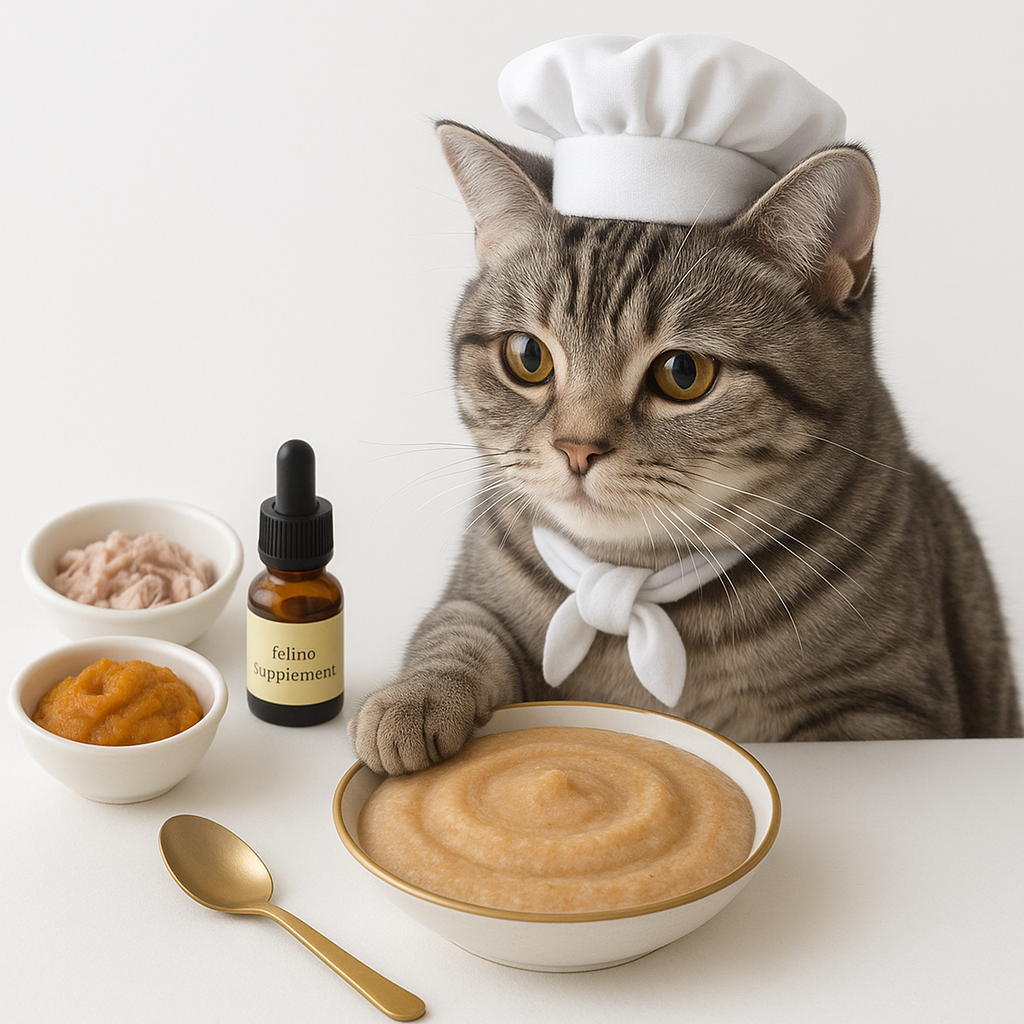
1) Soft Turkey & Pumpkin Senior Pâté (Complete with Supplement)
Yield: ~6–8 small servings (adjust to your cat’s needs)
Ingredients
- 500 g (1.1 lb) boneless, skinless turkey thigh, cooked until tender
- 60 g (1/4 cup) plain pumpkin purée (not pie filling)
- 120–180 ml (1/2–3/4 cup) warm, unsalted chicken or turkey broth (no onion/garlic)
- 2 tsp fish oil (or per your supplement plan)
- Complete feline vitamin‑mineral supplement, per label for total batch weight
- Warm water as needed for a soft pâté texture
Method
- Chop or shred the cooked turkey. Add to a blender/processor with pumpkin and half the warm broth.
- Blend, adding more broth/water until smooth and spoonable.
- When the mixture is warm (not hot), stir in fish oil and the complete supplement per label.
- Portion into small containers. Chill promptly.
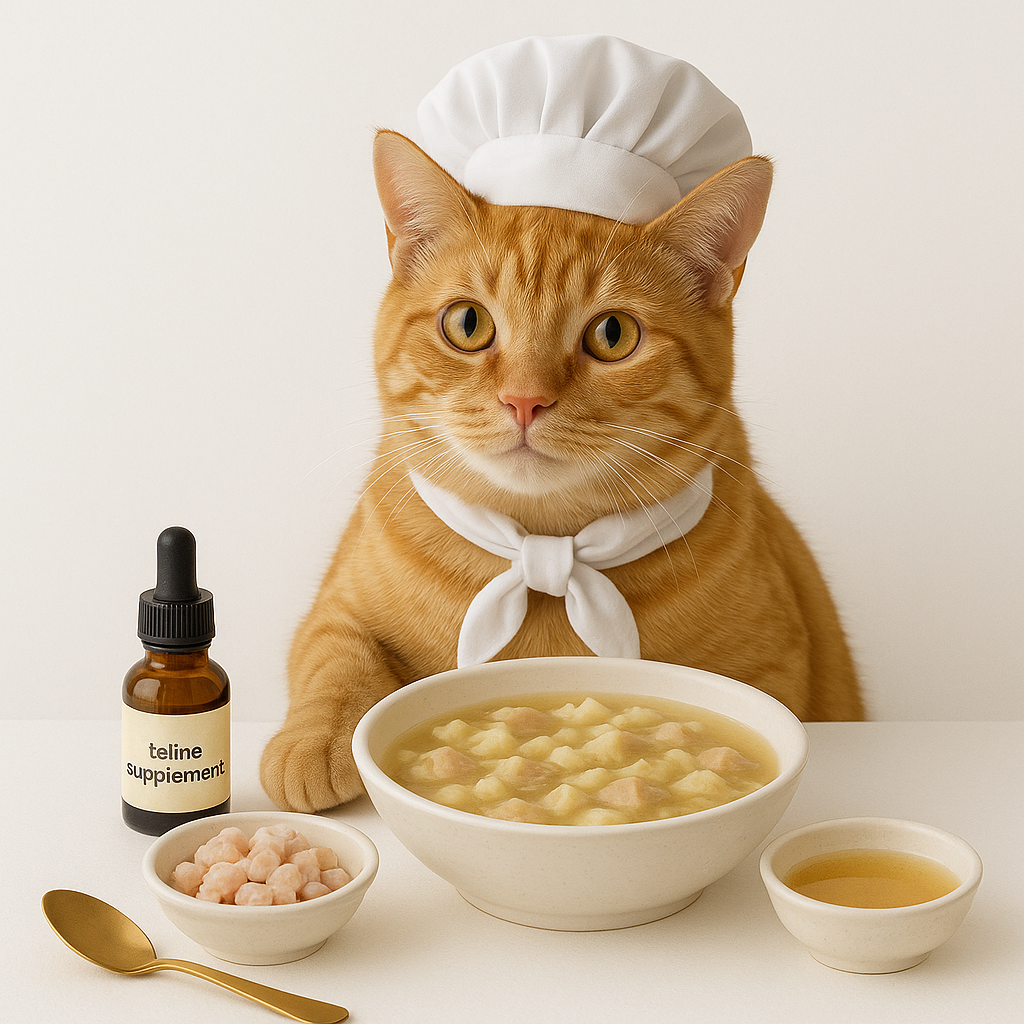
2) Gentle Chicken & Egg‑White Stew (Vet‑Supervised, Lower Phosphorus)
For cats with kidney concerns, use only under veterinary guidance. This recipe uses egg whites for high‑quality protein and a softer texture. It is complete only when paired with a suitable supplement.
Ingredients
- 300 g (10.5 oz) cooked boneless chicken thigh, finely chopped
- 3 large egg whites, gently scrambled (no oil/salt)
- 1–2 tsp neutral oil or chicken fat for calories (optional if advised by your vet)
- 2–4 tbsp finely puréed zucchini or extra water for moisture
- 60–120 ml (1/4–1/2 cup) warm, unsalted chicken broth
- Complete feline vitamin‑mineral supplement, per label
Method
- Combine chicken, egg whites, and puréed zucchini in a bowl.
- Stir in warm broth until it forms a soft stew or thick soup consistency.
- When warm (not hot), add oil if using and the complete supplement per label. Mix well.
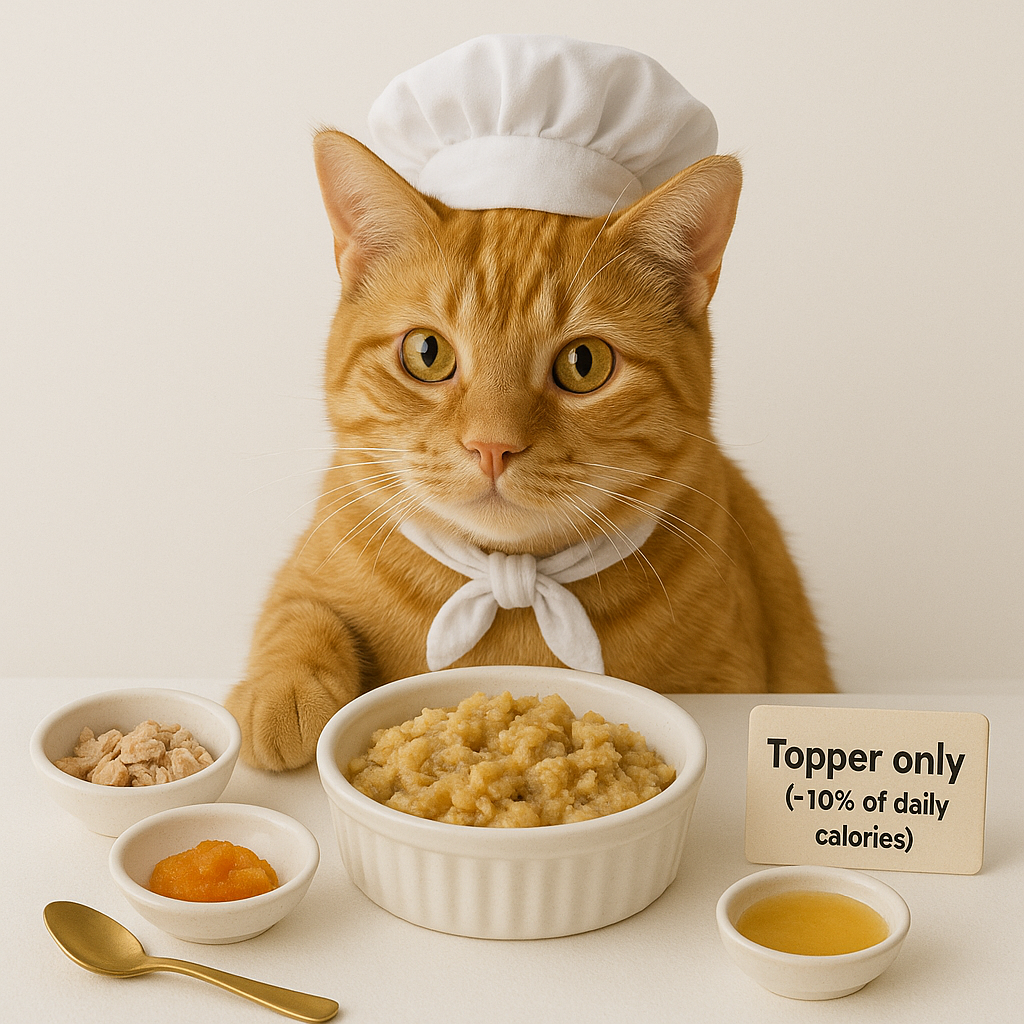
3) Sardine & Chicken Omega‑Topper (Not Complete)
Use as a topper only (generally up to ~10% of daily calories) to boost aroma, moisture, and omega‑3s.
Ingredients
- 50 g (1.8 oz) canned sardines in water, drained
- 50 g (1.8 oz) cooked chicken thigh, finely shredded
- 1–2 tsp pumpkin purée or water to loosen
Method
- Finely mash sardines and mix with shredded chicken.
- Add a splash of water/pumpkin to reach a soft, spoonable texture. Serve over your cat’s regular complete diet.
Storage, Reheating & Food Safety
- Chill fast: Divide into 1–3 day portions and refrigerate within 1 hour of cooking.
- Fridge: Use within 48–72 hours.
- Freezer: Freeze portions for up to 2 months. Thaw overnight in the fridge.
- Reheat gently: Warm to body temperature (never hot). Many seniors prefer food at ~cat‑warm.
- Cleanliness: Wash bowls after each meal; discard leftovers sitting out >30–60 minutes.
Portioning & Monitoring Your Senior Cat
- Ask your vet for a daily calorie target and ideal body weight.
- Weigh your cat weekly. Adjust portions gradually (±10%) to maintain a steady, lean body condition.
- Look for red flags: weight loss, increased thirst/urination, vomiting, constipation/diarrhea, painful chewing, or refusal to eat. Contact your vet promptly.
FAQ
Do I really need a supplement?
Yes. Homemade cat food must be balanced. A complete feline supplement (or a recipe from a veterinary nutritionist) helps provide taurine, calcium, vitamins, and essential fatty acids.
Can I use raw meat?
Speak with your vet first. Seniors and immunocompromised cats are at higher risk from bacteria in raw meats. If you do choose raw, use recipes formulated for raw feeding and handle with strict food‑safety practices.
What if my senior has kidney disease?
Do not self‑formulate. Ask your vet for a kidney‑friendly prescription or a custom recipe tailored to lab values.
How do I make food softer for a cat with dental issues?
Blend to a smooth pâté and thin with warm water or unsalted broth until your cat can easily lap it.
Shop Meaworld